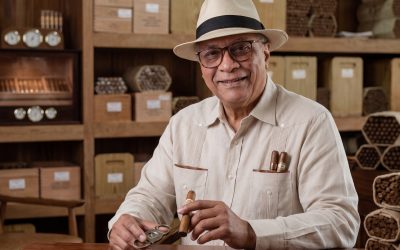
In the contemporary handmade cigar world, Eladio Diaz, former Global Vice President and Master Blender of Davidoff, embodies the pinnacle of quality integrity and blending genius.
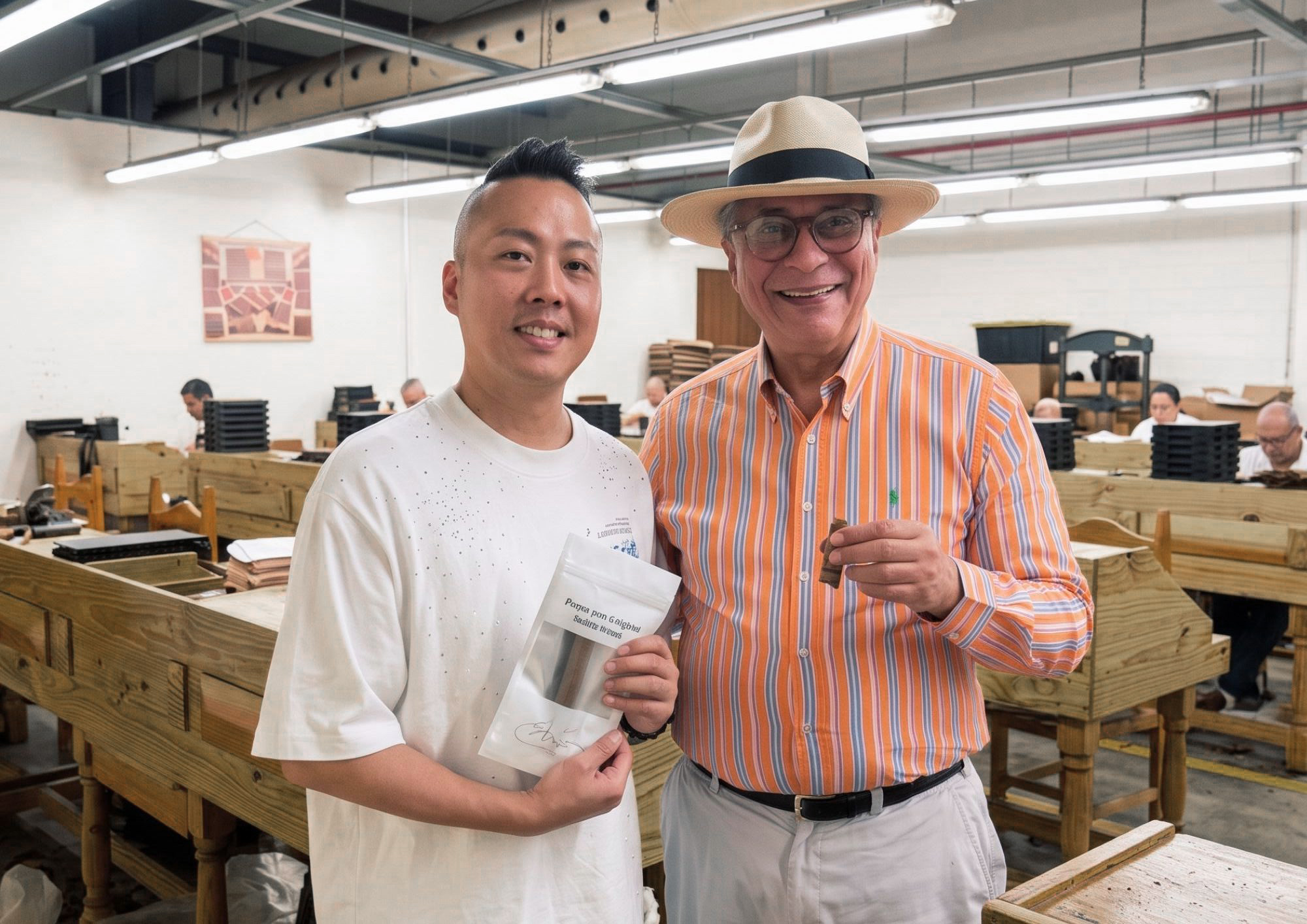
This exclusive interview was conducted in person by AURA Global founder Kevin Chang during his journey to the Dominican Republic to speak directly with Eladio Diaz's son. Through these first-hand core family accounts, we offer readers an intimate look into how the master evolved from a seven-year-old child laborer at the bottom of Dominican society, endured rigorous craftsmanship refinement and three decades of industry rivalries, and ultimately rose to become a cigar maestro revered by top collectors and multinational magnates alike.
The Interview Trilogy (Part I) / The Michael Jordan of Cigars: Eladio Diaz and His Soul-Crafted Davidoff Legend
Within the pantheon of contemporary premium handmade cigars, one name stands for absolute quality, unblemished business integrity, and a near-miraculous talent for blending—Eladio Diaz, the former Global Vice President and Master Blender of Davidoff.
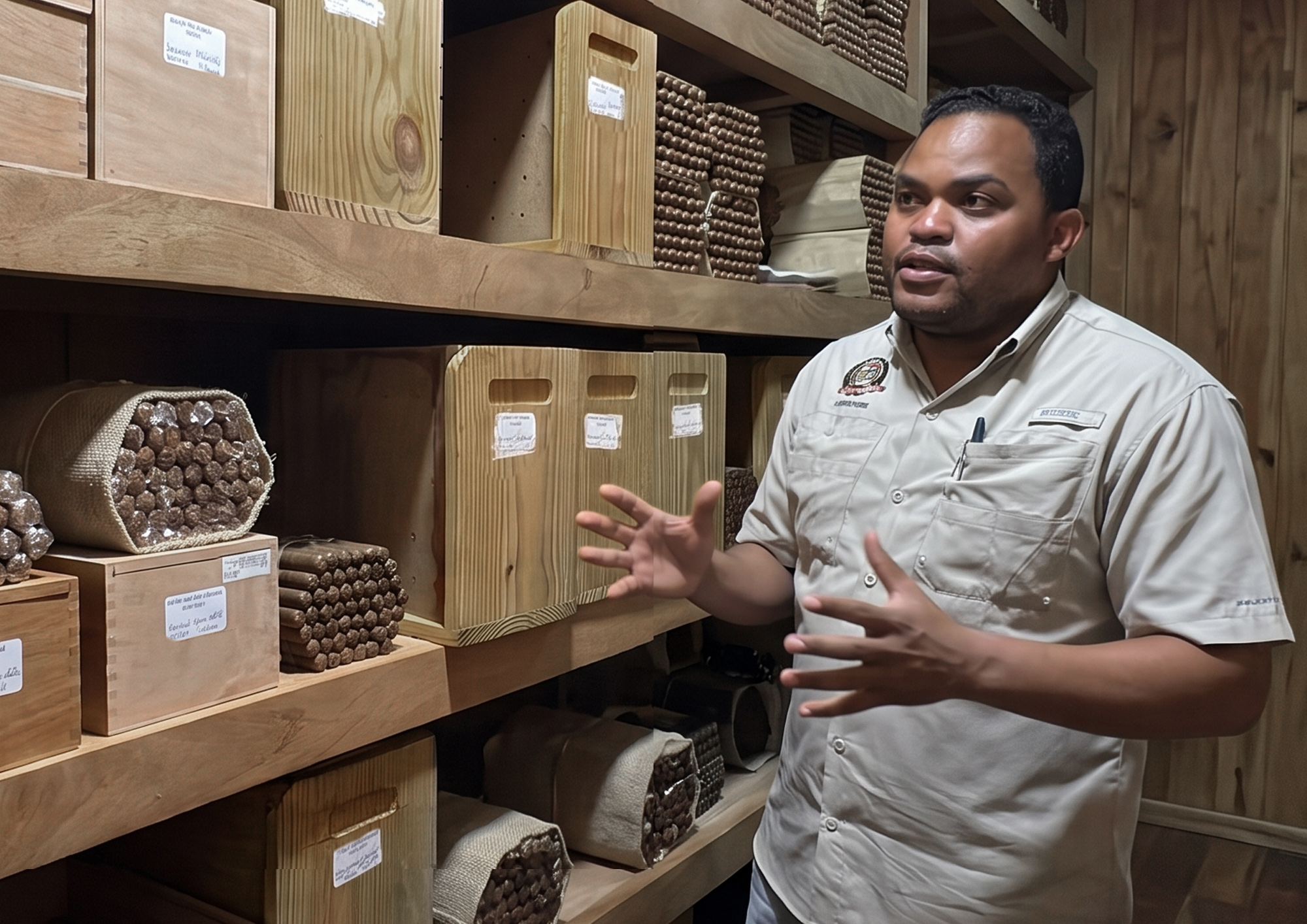
This interview is unveiled through the personal words of Eladio’s son. From a seven-year-old child laborer at the bottom of Dominican society to a true cigar gentleman revered by basketball icon Michael Jordan and multinational magnates alike, Eladio’s life perfectly embodies the ultimate artisan spirit of passing 'from one cigar to the next.'
The Starting Point of a Seven-Year-Old Child Laborer: An Old Ecuadorian Song and the Pride of a 'Gentleman'
To truly understand my father's work, you must first understand the man himself. From the age of seven, he has been completely immersed in the world of tobacco and cigars.
Stepping back into the 1950s in the Dominican Republic, a seven-year-old Eladio would spend his days humming 'De Cigarro en Cigarro' (From One Cigar to Another), a classic song by the legendary Ecuadorian singer Julio Jaramillo. He turned to his mother and said, 'Mama, this is the life I want to live.' Looking at her child, his mother knew she could not suppress his passion. She took him to a small nearby cigar factory called La Piana, where he was apprenticed to his very first mentor, Don Pancho.
At the time, her heart aching for her child, the mother humbly entreated the mentor: 'Mr. Pancho, he is only seven years old. I would be deeply grateful if you could teach him just a little knowledge. You do not need to train him, nor do you have to employ him—after all, he is just a child.'
But Master Pancho looked at the boy with determined eyes, turned to the mother, and said: 'Listen, young lady, anyone who works here must be paid.'
This simple statement laid the foundation for the factory's respect for craftsmanship. The mentor then said something to young Eladio that would impact him for the rest of his life: 'If you love what you do, you will never have to work a day in your life.'
Eladio started from the absolute basics, distributing raw materials and distinguishing wrappers, binders, and fillers. Driven by an astonishing focus while his peers were out playing, a 17-year-old Eladio had already displayed a formidable artisan talent—while an average roller maxes out at 450 to 500 standard cigars a day, he could independently select ingredients and mind-blowingly roll up to 1,000 cigars daily! As his reputation grew, anyone in the industry hearing the name Eladio would reverently call him 'The Gentleman'—a title earned not only by his transcendent hands but also by his unshakeable integrity in tobacco quality and business honesty.
Rolling Just 7 Cigars in 8 Hours! Tackling 'Salomón,' the Mount Everest of the Cigar World
At the age of 17, having already become the king of production yet refusing to rest on his laurels, Eladio yearned to tackle the most difficult vitola to roll in the cigar world—the 'Salomón,' a double-figurado shape with tapered ends and a bulbous middle.
He went alone to the Los Gonzales cigar factory to apply for a job, only to be coldly rejected by an arrogant supervisor: 'We're not hiring right now,' who then slammed the door in his face. Eladio did not give up. Realizing that the man was not the owner, he endured the scorching sun and waited resolutely outside the factory. When the owner, Efrain Gonzales, arrived in a large vehicle, Eladio stepped forward without a moment's hesitation: 'Mr. Efrain, I am eager to work for your company. I love cigars, and I want to learn how to roll more complex vitolas.'
Moved by the look in the young man's eyes, the owner brought him into the workshop and arranged for a legendary master to demonstrate the crafting of a Salomón firsthand. Before getting to work, the master looked at him and cautioned: 'Watch closely; I am doing this specifically for you.' The master then seamlessly completed three of the most difficult handmade cigars to roll in the world right then and there. Afterward, he asked him: 'Did you see clearly? Your turn.'
For a prodigy who could effortlessly crank out 1,000 standard cigars in a regular eight-hour workday, facing the ultra-complex craftsmanship of the Salomón meant that, even after pouring in every ounce of his strength for those entire eight hours, he managed to produce a mere seven cigars. This setback did not break him; instead, it completely ignited his passionate soul. He began frantically developing his techniques and dove headfirst into the scientific world of tobacco, relentlessly studying the microclimates and terroir differences of tobacco from all over the globe, including the Dominican Republic, Cuba, Nicaragua, and Honduras.
A Proud Farewell After 30 Years: The Complex Rivalries and Ties with an Authoritative Tycoon
Eladio then moved on to work at the renowned Quesada cigar factory, where the big boss, Manolo Quesada, was a lofty, authoritative figure who never greeted a single employee upon entering the plant. On the third day, Eladio, straight-shooting and deeply valuing mutual respect, could bear it no longer. He stood up directly and said to the big boss: 'Excuse me, boss. When a person comes into a place, he should say good morning to everyone.' Manolo was left utterly speechless in shock. Yet, early the next morning, this grand boss did the unprecedented—he went straight to Eladio’s desk and said 'good morning' to him, and him alone.
Later, COTASA, the ultimate pantheon of the cigar world—a dream factory of such high prestige at the time that employees were required to wear suits and ties to work—offered Eladio a staggering triple his salary, headhunting him to become the production director of their great rolling room (La Galera). When Eladio, out of professional integrity, submitted his resignation to Manolo three months in advance, Manolo panicked, scrambling to retain him by promising the exact same executive position. However, Eladio rejected it bluntly: 'Manolo, if you believed my capabilities warranted that executive position, you should have proactively placed me there in the first place, rather than waiting until I pleaded for it or until I am about to walk out the door.'
On the day of his departure, Manolo coldly declared behind his back: 'Eladio, if you dare to step out of this door today, don't you ever think about stepping foot back in here for the rest of your life!'
Eladio responded without once looking back: 'Manolo, as long as I have breath in my body, I will never set foot in this place again.'
This was an oath he kept for a full 30 years. Three decades later, Eladio, who had by then become the very soul of Davidoff, visited Manolo’s office alongside his business partners to evaluate a massive lot of 200,000 pounds of premium tobacco. When the group suggested inspecting the inventory in person at Manolo’s factory, Eladio looked at the now-aged Manolo and said slowly: 'Manolo, do you remember my oath from back then? As long as I have breath in my body, I will never set foot in your factory again. Have the tobacco samples sent over. Good luck.'